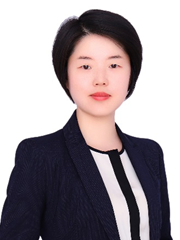
Education
09/2013-09/2017
PhD, Linguistics, Department of Chinese and Bilingual Studies, The Hong Kong Polytechnic University
09/2006-06/2009
Master of Arts, Linguistics, Graduate School, Xi’an International Studies University
09/2002-06/2006
Bachelor of Arts, English, School of English Studies, Xi’an International Studies University
Employment
02/2020 to present
Postdoctoral fellow, Institute of Corpus Studies and Applications, Shanghai International Studies University
06/2009 to present
Lecturer, School of Translation Studies, Xi’an International Studies University
(Subjects: Conference Interpreting, Consecutive Interpreting, Translating Cultural-related Texts, Listening and Note-taking for undergraduates; Interpreting for Foreign Affairs for graduates)
Publications
Journal articles:
Li, Chaoyuan, & Kent, Michael L. (2021). Explorations on Mediated Communication and Beyond: Toward a Theory of Social Media. Public Relations Review, 47(5): 1-11. [SSCI]
Li, Chaoyuan, & Wu, Dongying, Doreen. (2018). Facework by global brands across Twitter and Weibo. Discourse, Context and Media, 26: 32-42. [SSCI]
Li, Chaoyuan. (2018). Book review: Faked in China: Nation Branding, Counterfeit Culture, and Globalization. Critical Arts, 31(6): 1-5. [SSCI; A&HCI]
Liu, Ming, & Li, Chaoyuan. (2017). Competing discursive constructions of China’s smog in Chinese and Anglo- American English-language newspapers. Discourse & Communication, 11(4): 386-403. [SSCI]
Kent, Michael L., & Li, Chaoyuan. (2020). Toward a normative social media theory for public relations. Public Relations Review, 46(1): 1-11. [SSCI]
Li, Chaoyuan. (2019). Metaphors and dehumanization ideology: A critical analysis of the multimodal representation of women in advertising. Chinese Semiotic Studies, 15(3): 349-377. Berlin: De Gruyter.
Li, Chaoyuan. (2016). Review on language studies and globalization. Intercultural Communication Studies, XXV(3): 320-326.
李朝渊. (2011). 学生译员交替传译中修复策略使用机制阐释.《外语与外语教学》, 5: 78-82.
吴东英、李朝渊. (2016). 新媒体的社会语言学研究:回顾与展望.《当代语言学》, 18(4): 514-531.
李朝渊、吴东英. (2016). 跨国公司社交媒体话语中的关系言语行为分析. 《中国ESP研究》, 7(2): 30-40.
李朝渊、吴东英. (2019). 新媒体话语的跨文化研究.《跨文化研究论丛》, 1: 89-102.
李朝渊. (2021).“知识产权”和intellectual property译名辨析.《东方翻译》, 3: 37-43.
Translated volumes:
李朝渊. (2022).《美猴王》(中译英). 北京:朝华出版社.
李朝渊. (2016).《中国故事绘》(第一辑,《愚公移山》等10篇)(中译英). 北京:朝华出版社.
李朝渊. (2017).《中国故事绘》(第二辑,《梁祝》等10篇)(中译英). 北京:朝华出版社.
李朝渊、李放. (2018).《我也会发明》(中译英). 北京:知识产权出版社.
贺莺、李朝渊. (2014).《英语习语轻松学》(英译中). 北京:商务印书馆.
贺莺、李朝渊、李放. (2021).《学而为生:南非中学后学习新愿景》(英译中). 北京:中国社会科学出版社.
吴耀武、张宇珩、李朝渊. (2021).《中国的脱贫之路》(China’s Way Out of Poverty)(中译英). 北京:中国社会科学出版社.
Hongkou Campus: Room 607, Building 5, 550 Dalian West Road, Shanghai, China
Tel: +86-21-3537 2364 / +86-21-3537 2393
Songjiang Campus: Room 101, Building 5, 1550 Wenxiang Road, Shanghai, China
Tel: +86-21-6770 1865
Copyright @ Institute of Language Sciences. All rights reserved.