The Institute of Language Sciences upholds its spirit of research innovation, fully leveraging Shanghai International Studies University’s strengths in language research to engage with the frontiers of contemporary language science and promote the advancement of language sciences.
Led by Professor Hu Kaibao, the corpus research team has been actively engaged in corpus-related research while promoting academic exchange in the field of corpus research and application. Since the inaugural National Summer Institute on Corpus-based Translation Studies in 2012, the team has consistently organized annual training activities on corpus research and application for over a decade, garnering positive social feedback and a strong reputation.
This Workshop on Corpus Linguistics Research will feature international expert lectures, hands-on practice sessions, and research case analyses. It will systematically introduce the core concepts, research paradigms, and application scenarios of corpus linguistics, with a planned enrollment of 50 participants. The workshop will focus on practical applications of corpora in language research, discourse analysis, language teaching, and other fields, while also providing hands-on training in cutting-edge tools such as LancsBox. It aims to help university faculty and students, language researchers, and corpus enthusiasts comprehensively master the fundamental theories, scientific research methods, and technical skills of corpus linguistics, enabling participants to integrate corpus techniques into their own research or teaching, and to promote the application and innovation of corpus linguistics across multiple fields. This workshop will be offered in a hybrid format (in-person at SISU Songjiang Campus, Building 5, Room 136 + online via Tencent Meeting).
01 Training Program
This training will systematically introduce the core concepts, research paradigms, and application scenarios of corpus linguistics. The curriculum includes the following components:
(I) Foundational Theories of Corpus Linguistics (including scientific research methods, data objectivity, etc.)
(II) Corpus-Assisted Discourse Analysis (including hands-on cases such as collocation analysis, concordance analysis, keyword analysis, etc.)
(III) Corpora and Innovation in Language Teaching (including Data-Driven Learning, integration with AI technologies, etc.)
(IV) LancsBox Hands-On Practice (including data visualization, R language integration, advanced annotation, etc.)
(V) Research on Chinese Text Difficulty and Complexity
(VI) Local Grammar Research from the Perspective of Corpus Linguistics
Through these core courses, participants will gain a comprehensive understanding of corpus linguistics theory and techniques, promoting the practical application of corpus methods in research.
Day 1 – Theoretical Courses
Systematic introduction to the basic theoretical frameworks and research paradigms of corpus linguistics, including the definition, types, construction principles of corpora, and scientific methodology in linguistic research. Emphasis will be placed on objectivity, replicability, and empirical research methods in corpus data analysis, helping participants build a solid theoretical foundation. In-depth exploration of practical applications of corpora in discourse analysis and language teaching. Through case demonstrations and hands-on exercises, participants will learn core techniques such as collocation analysis, concordance line retrieval, and keyword extraction, while gaining insights into innovative applications of corpora combined with artificial intelligence.
Day 2 – Hands-On Courses
Morning Session: Advanced hands-on training in LancsBox, including corpus annotation, statistical analysis, and integration with R language. Using authentic corpus cases, participants will be guided through the entire analytical process from data preprocessing to result interpretation, enhancing their ability to conduct independent corpus research.
First Afternoon Session: Analysis of Chinese text difficulty and complexity, introducing datasets and tools developed by the instructor, and guiding participants on how to utilize these resources for innovative research.
Second Afternoon Session: Discussion on how to use corpus tools and methods for local grammar research, covering introduction to corpus resources, design of research approaches and methods, and their application.
Training Dates: November 11–12, 2025
Check-in Date: November 10, 2025, 12:00–17:00
Format: In-person (SISU Songjiang Campus, Building 5, Room 136) + Online (Tencent Meeting)
Registration Method: Online payment
Training Fees:
1. Online: 1,200 RMB/person; In-person: 1,500 RMB/person
2. SISU faculty and students: 750 RMB/person
After registration and payment, participants will be added to the course group via WeChat.
02 Registration and Payment
1. Online Payment
Individual Registration: Scan the QR code to register. Please ensure accurate submission of personal and payment information. (All information must be entered correctly, as it cannot be modified later.)
Based on the chosen workshop, enter the corresponding fee in the “Payment Amount” field and indicate the workshop name in the “Remarks” field. After successful registration, please add Ms. Zhang on WeChat (18061256876) to be added to the course group, noting your full name and the workshop you registered for.
2. Bank Transfer Registration
Group / Bank Transfer Registration: Before registering, please contact Ms. Zhang via WeChat (18061256876) to confirm group/bank transfer registration details. Payment for group or bank transfer registration should be made via bank transfer, with “Institution + Number of Participants + Workshop Type” noted in the transfer remarks. (Individual registrants should use their full name.) Bank account details are as follows:
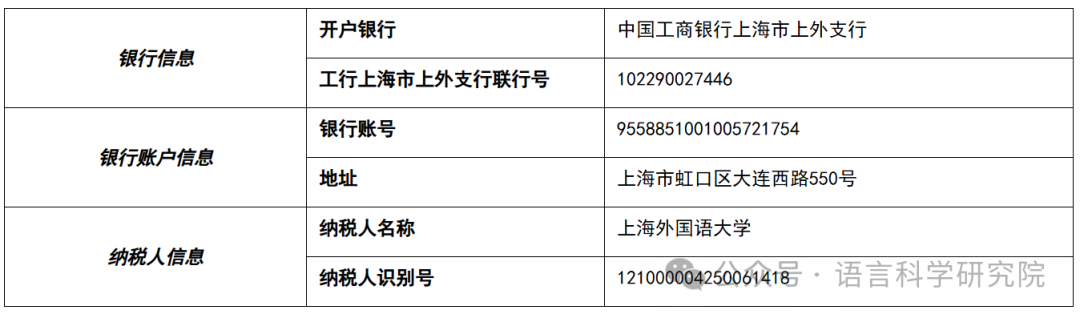
For group registration, the lead contact should contact Ms. Zhang via WeChat (18061256876) in advance to submit relevant group registration information.
For specific course inquiries, please contact Ms. Zhou via WeChat (17621410466).
- Participants may withdraw and request a refund before the start of the training program. After the program begins, withdrawals will be considered as voluntary abandonment, and no refunds will be issued.
Registration Period: From now until November 12, 2025
03 Important Notes
1. This workshop will be conducted in a hybrid format, with online sessions via Tencent Meeting. Participants are requested to download the Tencent Meeting app on their mobile devices or computers and register as users in advance.
2. During the workshop period, Shanghai International Studies University will provide invoicing services and training support.
3. A certificate of completion will be issued by the organizer, bearing the official seal.
04 Contact Information
Course Inquiries: Ms. Zhou – 17621410466
Other Inquiries: Ms. Zhang – 18061256876
Institute of Language Sciences
Shanghai International Studies University
September 28, 2025
Instructor Profiles
Tony McEnery is Professor of English Language and Linguistics at Lancaster University. His research focuses on the application of corpus methods in linguistics and interdisciplinary fields, covering theoretical and applied linguistics, multilingual studies, and corpus construction. He is also interested in the interaction between language and society and is dedicated to applying corpus linguistics to language teaching and learning.

Paul Baker is Professor of Corpus Linguistics at Lancaster University. His research interests include corpus linguistics, language and identity, and (critical) discourse analysis, with a particular focus on how language constructs identity (e.g., gender, sexuality, etc.) and social representations in media discourse. He has also contributed to the construction of several cross-lingual and cross-modal corpora.
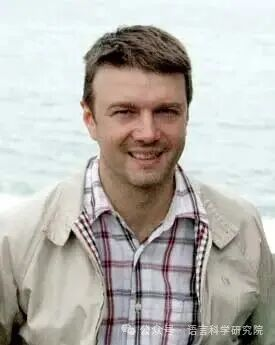
Vaclav Brezina is Professor of Corpus Linguistics at Lancaster University. His research interests include corpus linguistics, statistics, and the application of corpus methods to the study of spoken and written language, learner language, collocation, phraseology, and vocabulary, as well as corpus design and corpus tool development.
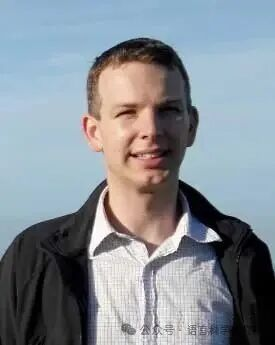
Lei Lei, Ph.D., Professor, Doctoral Supervisor, Shanghai International Studies University. His research interests include corpus-based and quantitative studies of lexical and syntactic description and diachronic change in modern Chinese, classical Chinese, and English, learner language, and digital humanities in language studies. He has published over 70 research articles in SSCI and CSSCI journals. He has led two projects funded by the National Social Science Fund of China. He serves on the editorial board of journals including Journal of English for Academic Purposes (SSCI) and as Associate Editor of Corpus-based Studies across Humanities (De Gruyter). He has been recognized as a Highly Cited Chinese Researcher by Elsevier and ranked among the world’s top 2% most cited scientists.
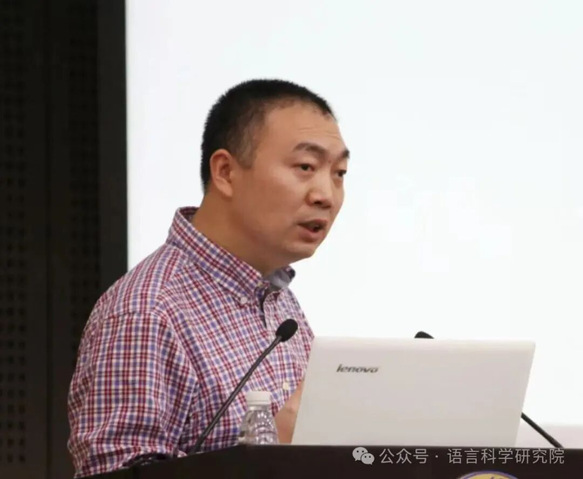
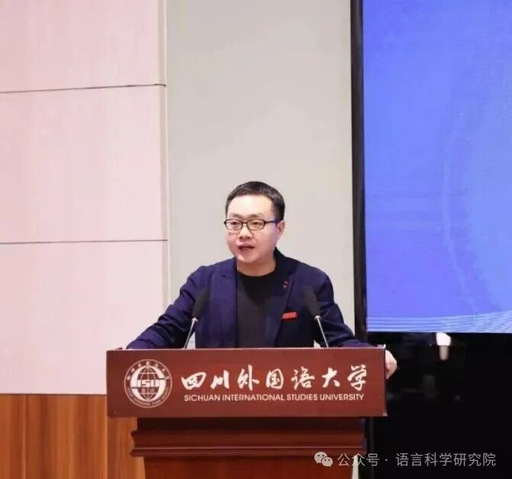
Su Hang, Ph.D., University of Birmingham; Postdoctoral Fellow, Beihang University. He is currently Jialing Distinguished Professor, Doctoral Supervisor, member of the University Academic Committee, and Director of the Chongqing Key Research Base of Humanities and Social Sciences “Center for Foreign Language Studies” at Sichuan International Studies University. His research interests include corpus linguistics, systemic functional linguistics, (corpus) pragmatics, and English for Academic Purposes. He has led and completed three research projects, including those funded by the National Social Science Fund of China and the China Postdoctoral Science Foundation. He has published two monographs/co-authored works: Local Grammar Approaches to Speech Act Studies (John Benjamins) and New Developments in Functional Linguistics Research (Tsinghua University Press), and has published over 50 papers in leading domestic and international linguistics journals such as Applied Linguistics and Foreign Language Teaching and Research. In 2019, he was selected for the “Chongqing Talent Program – Young Top Talent” support plan. In 2024, he was selected as a Reserve Candidate for the Fourth Batch of Chongqing Academic and Technical Leaders. He has received the Second Prize for Outstanding Social Science Achievement from Chongqing (2024), the Second Prize for National Teaching Achievement in Higher Education (Graduate Level, 2023), the Third Prize for Higher Education Teaching Achievement from Chongqing (2022), and the First Prize for Outstanding Research Achievement from Sichuan International Studies University (2022, 2024).