The Institute of Language Sciences continues to uphold its spirit of research innovation, fully leveraging Shanghai International Studies University’s strengths in language research to engage with the frontiers of contemporary language science and promote the advancement of language sciences.
Led by Professor Hu Kaibao, the corpus research team has been actively engaged in corpus-related research while promoting academic exchange in the field of corpus research and application. Since the inaugural National Summer Institute on Corpus-based Translation Studies in 2012, the team has consistently organized annual training activities on corpus research and application for over a decade, garnering positive social feedback and a strong reputation.
To further advance the application of corpora in foreign language teaching, research, and other related fields, and to strengthen academic exchange in this area, the Institute of Language Sciences at Shanghai International Studies University regularly hosts a series of training programs on corpus construction and application each year.
In 2025, the Institute will launch a series of higher-quality training activities, offered in a hybrid format combining online and in-person participation. The workshops will integrate expert lectures, case discussions, and hands-on practice, introducing research methods and covering specific operations such as corpus construction and application, the use of large language models in language studies, translation studies, and literary research, as well as methodologies and practices in language science research. The workshops aim to enhance the ability of foreign language educators, students, and researchers to use corpora and related tools in their academic work.
01 Summer Workshop Series Schedule
PART/01
Workshop on Research Methods and Practices in Language Science
Course Content:
This training moves beyond superficial theoretical instruction, adopting a core design logic centered on “recreating authentic research scenarios.”
- Technically Rigorous: Covers three “golden tools” of language research—eye-tracking (Eyelink), electroencephalography (EEG/ERP), and R language statistics—with step-by-step breakdowns from equipment principles to operational details.
- Hands-On Application: Each technical module includes a three-step process: laboratory observation → data collection → analysis practice. For example, in the eye-tracking session, participants will design a reading experiment, collect data, and use R to conduct visualization analyses of metrics such as first fixation duration and regression path duration.
- Resource Development: Provides exclusive access to classic psycholinguistic paradigm code libraries (E-Prime/PsychoPy), EEG preprocessing scripts (EEGLAB), and statistical templates (lme4 package) to help participants quickly replicate high-level research. Additionally, a dedicated “expert consultation” session will be offered, where journal reviewers in the field will provide targeted guidance on experimental design flaws and address key challenges in manuscript submission.
Day 1: Four courses: Cognitive Neuroscience of Language, Psycholinguistic Experimental Design, Classic Experimental Paradigms in Psycholinguistics, Statistical Analysis and R Language Practice
Day 2: Two courses: Eye-Tracking Experimental Techniques (including laboratory observation and data analysis), EEG Experimental Techniques (including laboratory observation and data analysis)
Day 3: Python Text Data Processing: Structured processing of text data (Pandas basics), tokenization, part-of-speech tagging, and dependency parsing (spaCy basics)
Note: Day 3 course requirements:
- Participants should have a basic understanding of Python syntax.
- Participants must bring their own laptops with Python, Pandas, spaCy, and other required libraries pre-installed.
Training Dates: July 10–12, 2025
Instructors: Professor Jiang Xiaoming, Professor Lei Lei, Assistant Research Fellow Zhang Wenshuo
Venue: In-person at SISU Songjiang Campus, Building 5, Lecture Hall 136; online via Tencent Meeting
Registration Method: Online registration and payment
Registration Period: May 1 – July 11, 2025
Training Fees:
In-person:
1. Non-student: 3,000 RMB/person
2. Student: 2,200 RMB/person (valid student ID required)
3. Group registration (5+ participants): 2,000 RMB/person (not combinable with student discount)
Online:
1. Non-student: 2,600 RMB/person
2. Student: 1,800 RMB/person (valid student ID required)
3. Group registration (5+ participants): 1,600 RMB/person (not combinable with student discount)
PART/02
Large Language Model Workshop Series
Course Content:
This training focuses on the practical use of AI tools, building intelligent agents based on large language models, and developing localized knowledge bases using large language models. Through a three-tiered progressive training approach—“principle deduction → toolchain deconstruction → scenario replication”—the program aims to enhance participants’ practical skills in applying scenario-based AI tools.
Day 1: Application of DeepSeek + AI Generation Tools in Foreign Language Teaching and Language Data
This session will focus on analyzing the fundamental principles and core architecture of large language models, combined with hands-on practice to give participants an in-depth experience of how “DeepSeek + X” can empower foreign language education, activating innovation in teaching and research.
Day 2: Building an “AI Close Reading Expert” Intelligent Agent Using Large Language Models
This session will introduce the core functions and architectural principles of intelligent agents. Through a hands-on project, participants will master end-to-end design thinking from requirements analysis to functional implementation, developing workflow-driven agents and gaining a deep understanding of how agents create value in language learning scenarios.
Day 3: Development and Teaching Application of Localized Language Learning Knowledge Bases
This session will focus on building personal knowledge bases using large language models combined with Retrieval-Augmented Generation (RAG) technology. Through a hands-on project, participants will learn the knowledge base construction workflow, ensuring the privacy of teaching and research data, enabling deep customization of teaching and research scenarios, and improving teaching and research efficiency.
Training Dates: July 13–15, 2025
Instructor: Associate Professor Ni Qin
Venue: In-person at SISU Songjiang Campus, Building 5, Lecture Hall 136; online via Tencent Meeting
Registration Method: Online payment
Registration Period: May 1 – July 14, 2025
Training Fees:
In-person:
1. Non-student: 3,000 RMB/person
2. Student: 2,200 RMB/person (valid student ID required)
3. Group registration (5+ participants): 2,000 RMB/person (not combinable with student discount)
Online:
1. Non-student: 2,600 RMB/person
2. Student: 1,800 RMB/person (valid student ID required)
3. Group registration (5+ participants): 1,600 RMB/person (not combinable with student discount)
02 Registration and Payment
01 Online Payment
Individual Registration: Scan the QR code to register. Please ensure accurate submission of personal and payment information. (All information must be entered correctly, as it cannot be modified later.)


Based on the chosen workshop, enter the corresponding fee in the “Payment Amount” field and indicate the workshop name in the “Remarks” field. After successful registration, please add Ms. Zhang on WeChat (18061256876) to be added to the course group, noting your full name and the workshop you registered for.
02 Bank Transfer Registration
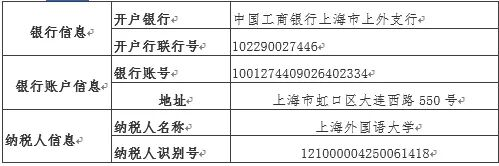
Group / Bank Transfer Registration: Before registering, please contact Ms. Zhang via WeChat (18061256876) to confirm group/bank transfer registration details. Payment for group or bank transfer registration should be made via bank transfer, with “Institution + Number of Participants + Workshop Type” noted in the transfer remarks. (Individual registrants should use their full name.) Bank account details are as follows:
Important Notes:
1. For group registration, the lead contact should contact Ms. Zhang via WeChat (18061256876) in advance to submit relevant group registration information.
2. Participants may withdraw and request a refund before the start of the training program. After the program begins, withdrawals will be considered as voluntary abandonment, and no refunds will be issued.
03 Registration Period
Workshop on Research Methods and Practices in Language Science Registration Period: May 1 – July 11, 2025
Large Language Model Workshop Series Registration Period: May 1 – July 14, 2025
04 Important Notes
1. The workshops will be conducted in a hybrid format, with online sessions via Tencent Meeting. Participants are requested to download the Tencent Meeting app on their mobile devices or computers and register as users in advance.
2. During the training period, Shanghai International Studies University will provide invoicing services and training support.
3. A certificate of completion will be issued by the organizer, bearing the official seal.
05 Instructor Profiles
Lei Lei
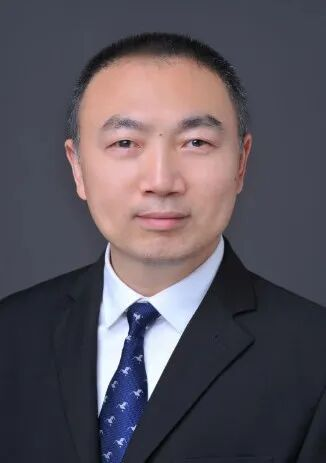
Ph.D. in Literature, Professor, Doctoral Supervisor, Institute of Language Sciences, Shanghai International Studies University. His research interests include corpus linguistics, digital humanities in language studies, English for Academic Purposes, and quantitative linguistics. He has published multiple monographs with Cambridge University Press, TESOL Press, and Science Press. He has published nearly 40 research articles in SSCI journals such as Applied Linguistics, Language Teaching, International Journal of Corpus Linguistics, and System, as well as over ten book reviews, two of which have been selected as ESI Highly Cited Papers. He has also published over ten articles and book reviews in CSSCI journals such as Modern Foreign Languages, Foreign Language Teaching, and Journal of PLA University of Foreign Languages. He has led and completed multiple research projects, including those funded by the National Social Science Fund of China. He serves on the editorial board of several domestic and international journals, including Journal of English for Academic Purposes (SSCI).

Jiang Xiaoming
Professor, Doctoral Supervisor, Associate Dean of the Institute of Language Sciences, Shanghai International Studies University; Deputy Director of the Key Laboratory of Language Sciences and Multilingual Intelligent Applications. He holds a Ph.D. in Basic Psychology. His work focuses on research and talent development in psycholinguistics and neurolinguistics. He has been recognized as a Highly Cited Chinese Researcher by Elsevier in the field of Foreign Languages and Literatures, a National Young Talent, and received the Speech Communication Best Paper Award from the International Speech Communication Association (ISCA) and the European Association for Signal Processing (EURASIP). He serves as Associate Editor of Bibliography of Pragmatics Online, Guest Associate Editor of Frontiers in Psychology (Language Section), and serves on the editorial boards of Psychological Science and Brain Sciences. He is a peer reviewer for nearly 50 SSCI/SCI journals. He has led research projects funded by the National Natural Science Foundation of China, the Shanghai Natural Science Foundation, the National Language Commission, and the Shuguang Program, and has participated in two Major Projects of the National Social Science Fund of China. Using behavioral, neurophysiological, neuroimaging, speech signal processing, and computational modeling approaches, his research explores multimodal expressive and receptive cues in speech communication, the processing and modeling of cultural and social-affective information in speech, and cognitive operations in language activities and their applications. He has published nearly 60 research articles in SSCI/SCI journals, nearly 40 as first or corresponding author, and has edited four volumes (as lead editor) and translated one book.

Ni Qin
Associate Professor, Master’s Supervisor, Institute of Language Sciences, Shanghai International Studies University; Shanghai Young Science and Technology Rising Star Talent. She holds a Ph.D. in Computer Science and Technology from the Technical University of Madrid, Spain, and is a member of the International Expert Group on AI and Education at UNESCO. Her research interests include cognitive computing, affective computing, and AI applications in education. As a drafter, she participated in the development and release of official UNESCO documents: Guidance for Generative AI in Education and Research and AI Competency Framework for Teachers. She has led multiple research projects as Principal Investigator, including projects funded by the National Natural Science Foundation of China, the Shanghai Natural Science Foundation, consultancy projects commissioned by UNESCO, special AI technology initiatives under the Shanghai Science and Technology Innovation Action Plan, and General Projects of the Shanghai Natural Science Foundation. Her research has been published in leading AI journals and conferences, including IEEE Transactions on Learning Technologies, ACM Transactions on Intelligent Systems and Technology, IEEE Transactions on Artificial Intelligence, and AAAI.
Zhang Wenshuo
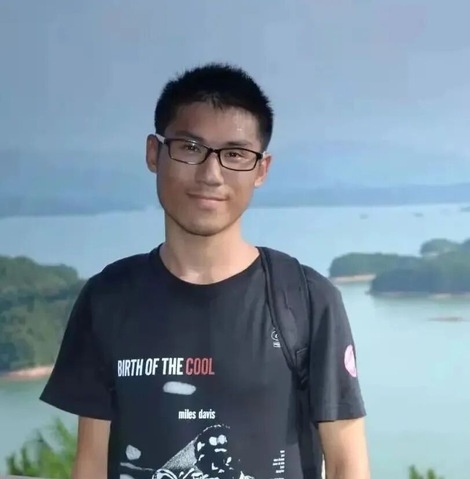
Assistant Research Fellow, Institute of Language Sciences, Shanghai International Studies University. She graduated from the School of Psychology and Cognitive Science, East China Normal University, with a Bachelor of Science in 2012, and received her Ph.D. in Psychology from the School of Psychological and Cognitive Sciences, Peking University, in 2020. She has extensive experience in interdisciplinary language research and has published multiple papers in renowned international journals. Her research interests focus on the cognitive processes underlying human language communication. She employs techniques such as eye-tracking, electroencephalography (EEG), magnetic resonance imaging (MRI), and brain lesion studies to investigate cognitive behaviors and their neural substrates.